Field teams at many CPG brands and distributors still work separately. One app for shelf audits, another for orders, and spreadsheets for deliveries. This setup creates delays, overlooked compliance issues, and constant manual cleanup.
The platforms featured here help connect these pieces. Each offers its own way of combining audits, sales orders, and distribution workflows. They differ noticeably in scope, cost structure, and how quickly you can get started. While some specialize in audit compliance and AI photo analysis, others come as part of broader enterprise platforms with longer setups.
The better ones let a single rep handle both planogram checks and reorders without switching apps.
Compare 8 Field Sales, Retail Execution, and B2B Platforms
Different platforms do different jobs. Some handle field sales and orders. Others focus on shelf audits and retail execution. Many are just B2B ordering portals. Pick based on whether your team sells, stocks shelves, or takes orders online.
SimplyDepo
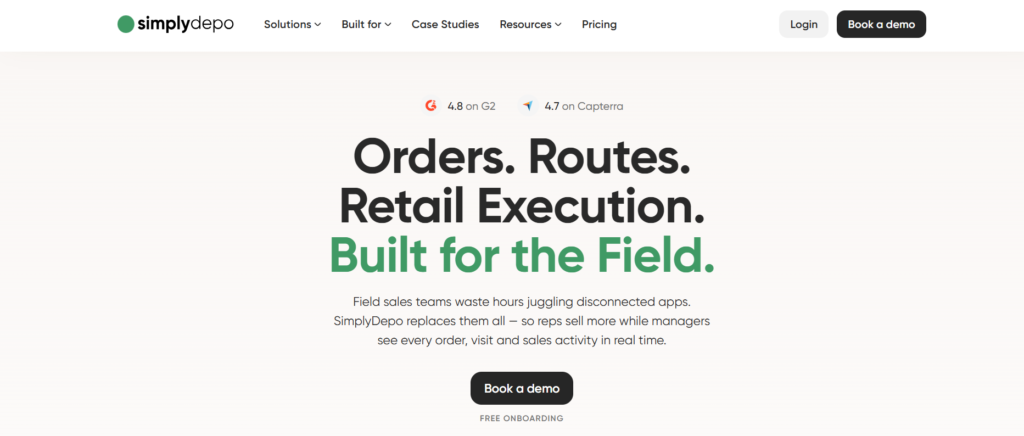
SimplyDepo is the platform that brings everything together in one mobile app: shelf audits, planogram checks, photo reports, in-store demos, visit tracking, order capture, DSD routing, van sales, invoicing, and direct sync with QuickBooks and Shopify.
It was built specifically for CPG brands and distributors who are tired of switching between multiple tools. Founded in 2022, SimplyDepo solves a problem most other platforms overlook — that awkward gap between finishing a store audit and placing the actual reorder.
The same field rep who snaps photos of the shelf can capture the order, plan tomorrow’s route, and send the invoice straight to QuickBooks. Everything works offline, and there’s no need for a second app. On top of that, it delivers smart AI insights that predict demand, spot winning and losing SKUs, and flag merchandising issues in real time.
Unlike rigid audit-only tools with user minimums or bulky enterprise systems that cost a fortune to implement, SimplyDepo keeps it simple: $89 per rep per month, no annual contract, no setup fees, and a full 30-day free trial that includes team training. Your whole team can be up and running in days, not months.
| Feature | Coverage |
| Offline mobile functionality | Full audit + order capture in low-connectivity stores |
| Native integrations | QuickBooks, Shopify—no middleware |
| Geographic scope | US and Canada only |
Cons: Not designed for multi-region, multi-currency deployments across EMEA or APAC—teams operating outside North America will need a different platform.
Who Should Still Choose SimplyDepo
SimplyDepo is for SMB and mid-market CPG brands in the US or Canada that want to replace audit apps, order apps, and spreadsheets with one mobile workflow. Best for teams of 1–100 reps, merchandisers, and route drivers handling in-store visits, DSD routes, or van sales who want to avoid enterprise pricing and long implementations.
Skynamo
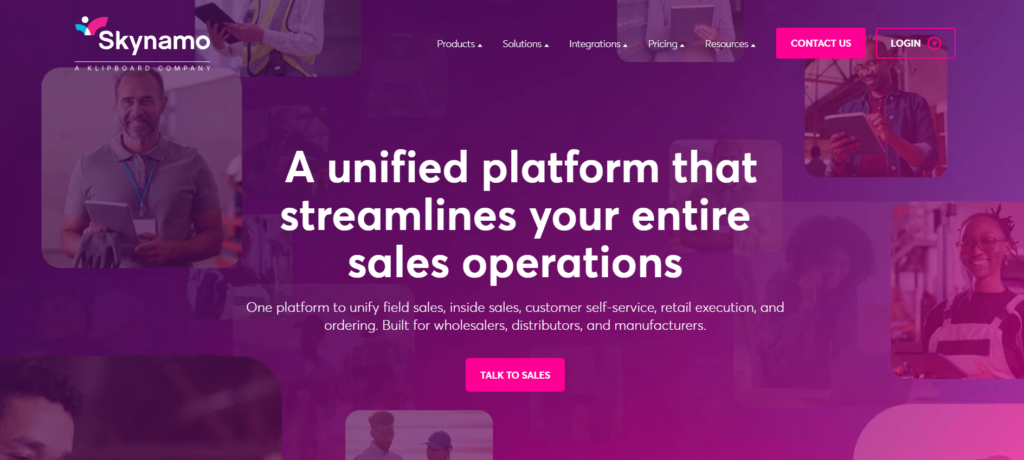
Skynamo helps manufacturers, wholesalers, distributors, and importers manage their field sales and B2B operations more effectively. It gives sales teams the tools to handle customer relationships, capture orders, and coordinate efforts across various channels.
You get a practical mobile app for reps in the field, along with features for inside sales and a customer self-service portal. Reps can easily manage visits, pull up catalogs, and enter orders on the spot. Customers, meanwhile, can place orders through their own branded portal.
Beyond the basics, it includes analytics, reporting, and smart AI insights via the Radar module. The platform is built to connect field sales, internal teams, and online ordering while syncing well with other business systems.
It stays focused on sales workflows rather than retail execution like shelf audits. Companies with multi-region operations, especially in Europe, Asia-Pacific, and similar markets, tend to like it most.
Cons: Users mention limited app layout customization and occasional connectivity issues. It is stronger for sales operations than dedicated retail execution. (Capterra reviews)
Who Should Still Choose Skynamo
It’s a good choice for international B2B sales organizations that need strong field sales tools, order capture, and customer portals across multiple regions — especially when in-store merchandising isn’t required.
WizCommerce
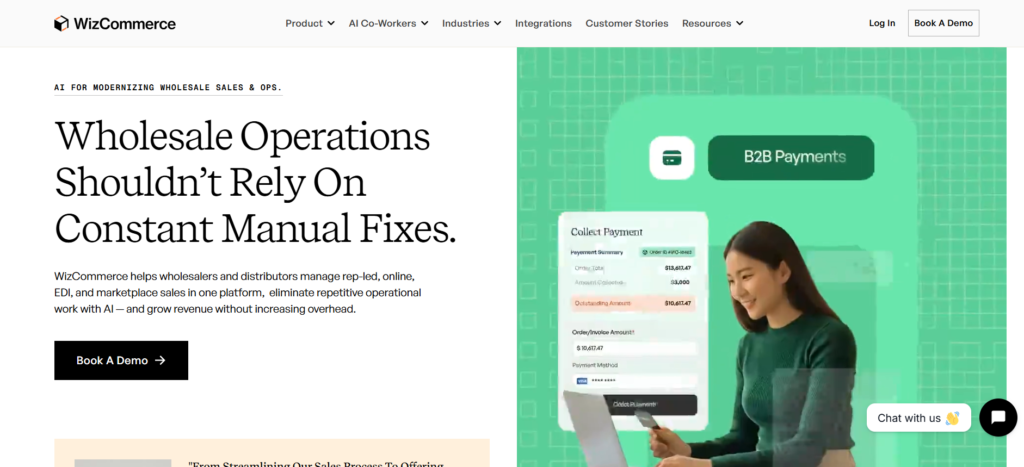
WizCommerce is designed for wholesalers and distributors who need both online and rep-led selling capabilities. This AI-powered platform unites a B2B storefront with field sales tools for capturing orders, building quotes, and handling customer relationships.
It supports payments, marketplace orders, and EDI, while AI takes care of generating quotes, making product suggestions, and prioritizing tasks. Teams also benefit from smart catalogs, advanced search, and up-to-date visibility across inventory and orders. Integration with ERP and accounting systems helps everything stay in sync.
The platform concentrates on B2B commerce rather than retail execution, so it doesn’t support shelf audits or merchandising work.
Cons: Users list some weaknesses around the learning curve, inaccuracy, complex implementation, accuracy issues, and access issues. It is not positioned for shelf audits, merchandising, or retail execution. (G2 reviews)
Who Should Still Choose WizCommerce
Companies focused on modernizing wholesale operations through digital channels and automation tend to get the most value. It fits best when the priority is smooth online ordering combined with rep support.
Pepperi
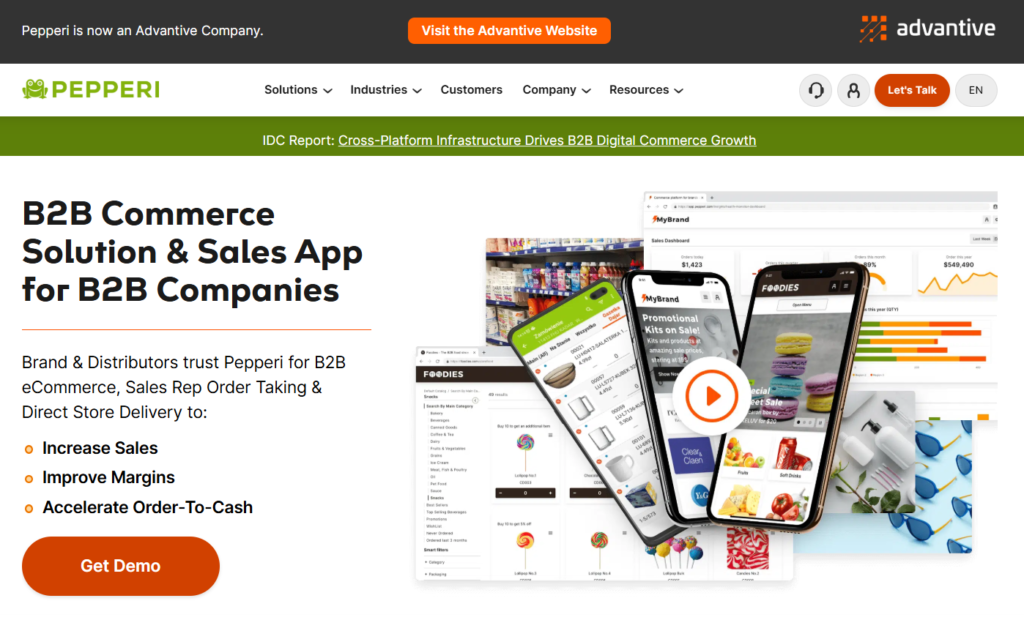
WizCommerce is an AI-powered B2B sales and eCommerce platform built for wholesalers, distributors, and manufacturers. It brings together online ordering and rep-led sales inside a single system.
The platform offers a clean B2B storefront alongside mobile tools for sales reps to capture orders, create quotes, and manage customer relationships. It also handles embedded payments, marketplace orders, and EDI connections.
On the AI side, it automates quote generation, suggests product recommendations, and helps prioritize follow-ups — which helps teams spend less time on repetitive tasks. Users also get AI-generated catalogs, smart search, and real-time visibility into stock and orders. It integrates nicely with ERP, accounting, and inventory systems to keep data consistent.
That said, WizCommerce focuses strictly on B2B commerce and sales automation. It works well for wholesale businesses that want to combine digital self-service with field sales, but it doesn’t cover shelf audits or in-store merchandising.
Weakness: Users report higher costs compared to SMB-focused tools, along with the need for setup support or partner involvement. Some also mention issues with customer support and billing. (Capterra reviews)
Who Should Still Choose Pepperi
Mid-sized and enterprise companies with multi-channel distribution models that need B2B eCommerce, field sales, DSD, and retail execution managed in one scalable system. Best for organizations with IT resources to support longer implementations and budgets that accommodate enterprise software pricing.
Repsly
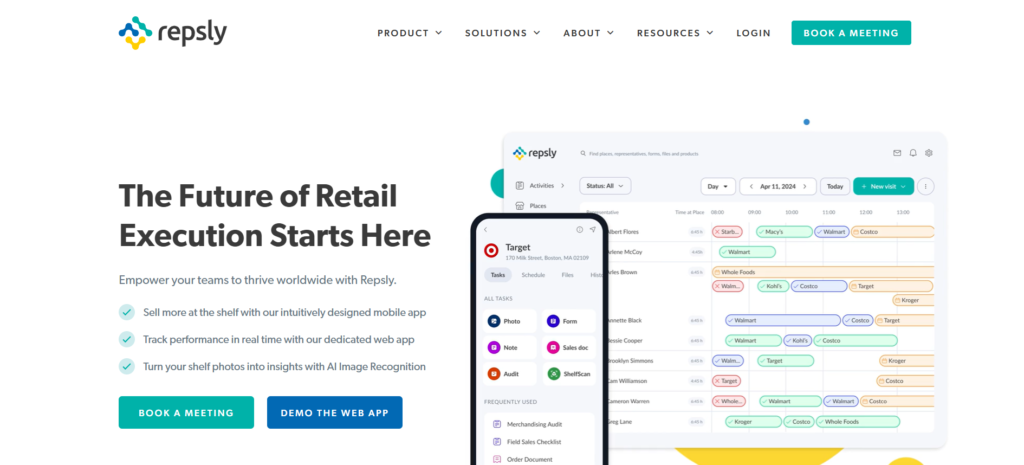
Repsly helps CPG brands keep their products visible and well-merchandised in stores. Rather than trying to do everything, it focuses on strong audit accuracy and field execution.
Launched in 2008, it equips field teams with simple tools to collect structured data during visits. One of its most useful capabilities is AI-powered photo recognition, which quickly identifies products on shelves and checks compliance — saving time and reducing errors.
You’ll find it commonly used for planogram audits, availability tracking, competitor analysis, and promotion checks. Managers benefit from territory optimization, task management, and clear real-time dashboards.
Overall, it’s a solid retail merchandising solution. It supports some order and return tracking, but it’s not meant for complete order-to-cash workflows or DSD routes.
Cons: Users report that back-office functions can feel clunky and poorly organized, along with occasional app logouts or stability issues. Some also mention usability challenges in certain workflows. (G2 reviews)
Who Should Still Choose Repsly
Mid-sized to large CPG companies and retail service organizations that prioritize in-store visibility, audit accuracy, and AI-powered shelf compliance over integrated sales, invoicing, or DSD workflows. Best for merchandising teams that need structured data collection without full order management.
GoSpotCheck
For wholesale distributors and manufacturers, Zoey offers a practical B2B eCommerce and order management solution. It brings order intake from multiple channels — reps, portals, phone, and email — under one roof.
Customers enjoy a self-service portal for checking prices and placing reorders easily. Sales teams have access to quoting tools, order capture, and account management features on mobile and desktop.
The system also covers CRM, invoicing, and automated accounts receivable. Features like split shipments and automated billing help reduce manual work significantly. It integrates smoothly with popular tools such as NetSuite, QuickBooks, and ShipStation.
Zoey is mainly positioned for B2B ordering and back-office efficiency. It’s a good fit for businesses that want to enable customer self-service without losing control over pricing and financial workflows.
| Capability | Use case |
| Workflow builder | Customize task flows for audits, surveys, compliance checks |
| Image recognition | Extract insights from field photos (placement, quality, compliance) |
| Multi-industry support | Retail, hospitality, facilities management, consumer goods |
Weakness: Some users mention connectivity issues, and the platform is positioned around field execution/audits rather than order capture, invoicing, or DSD workflows. (G2 reviews)
Who Should Still Choose GoSpotCheck
Mid-sized and enterprise companies with dispersed frontline teams across multiple industries that need standardized task execution, compliance tracking, and real-time visibility. Best for organizations prioritizing audit workflows and operational consistency over integrated order capture or DSD functionality.
Zoey
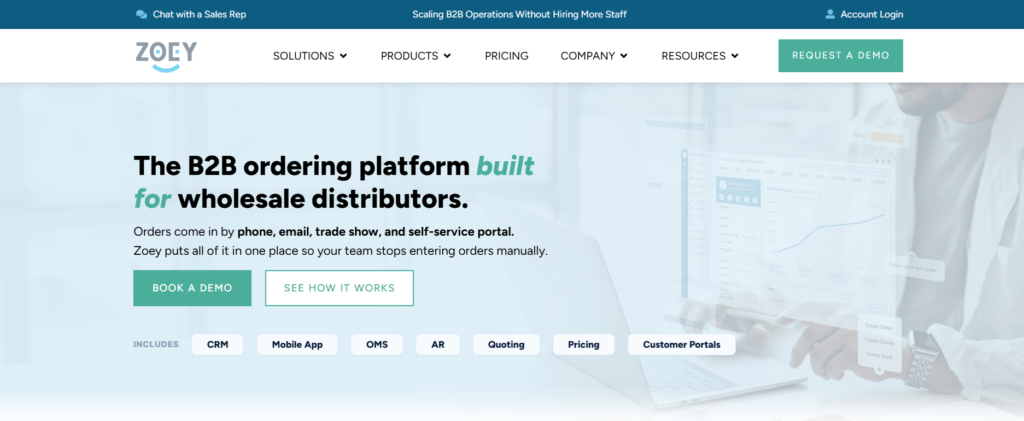
Zoey helps wholesale distributors, manufacturers, and B2B brands manage orders from every channel in one place. Sales reps, customer portals, phone orders, and emails all feed into the same system.
Buyers can log into a self-service portal to view their pricing, reorder items, and place orders without needing to call anyone. Sales teams get solid tools for quoting, order capture, and customer management on both mobile and desktop.
Beyond that, it combines CRM, invoicing, and accounts receivable features. Workflows like split shipments and automated billing make life easier by reducing manual data entry. It connects well with ERP systems like NetSuite and QuickBooks to keep data consistent.
Zoey is built for B2B ordering and back-office efficiency. It’s not designed for shelf audits or in-store merchandising, but it works great for wholesalers who want smoother self-service ordering while staying in control.
Cons: Users report slow or delayed customer support response times, along with limited access to real-time assistance. Some also note that reliance on email-based support can delay issue resolution. (G2/Capterra reviews)
Who Should Still Choose Zoey
Zoey is a good choice for wholesale businesses that want to centralize order intake and enable customer self-service. Companies that rely on B2B eCommerce portals, quoting, invoicing, and account management will benefit from its functionality. It is particularly useful for teams that want to reduce manual order entry and improve back-office efficiency without focusing on field execution.
B2B Wave
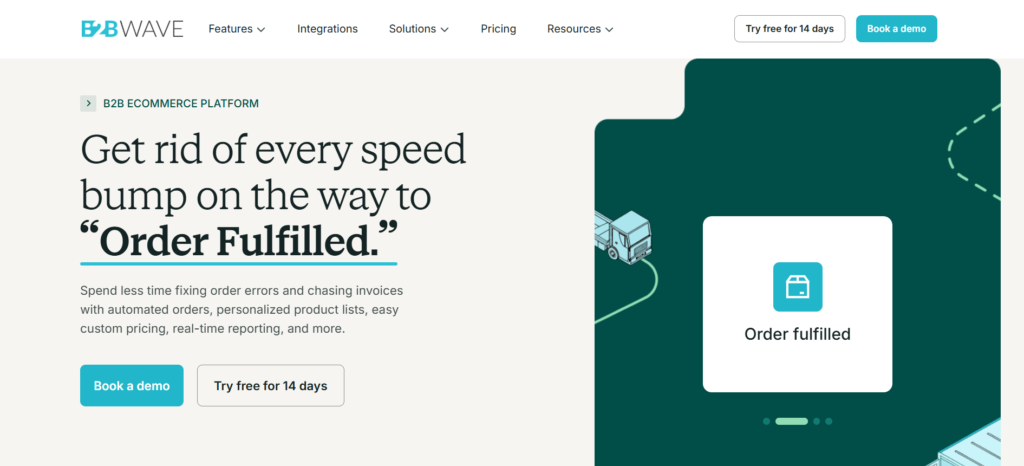
B2B Wave helps wholesale businesses move their ordering online with less effort. Aimed at distributors, manufacturers, and suppliers, it combines customer management, pricing, and order processing into a single platform.
You get a professional, branded store where buyers can shop, see their specific prices, and check out quickly. Features include product catalogs, live inventory, order history, and flexible pricing rules. Reporting tools also give useful insights into sales trends and stock.
The system plays nicely with accounting and shipping software such as QuickBooks, Xero, and ShipStation. It works especially well for companies that want reliable online ordering rather than field sales support. Many small to medium wholesalers use it to automate routine tasks and make buying easier for their customers.
Cons: Users report limited advanced reporting and analytics, along with restricted third-party integrations and data syncing. Some also mention basic customization for the customer portal and inefficiencies when handling large catalogs or bulk actions. (G2 reviews)
Who Should Still Choose B2B Wave
Zoey works well for wholesale businesses that want to centralize orders and offer customer self-service. It’s a solid fit for teams focused on B2B eCommerce, quoting, invoicing, and improving back-office efficiency — especially if field execution and merchandising aren’t priorities.
Conclusion
These platforms solve different parts of the same problem. Some focus on audits and visibility, others on sales and ordering, while a few try to combine everything into one workflow. There is no single best option for every team.
The right choice depends on what matters most — in-store execution, order capture, or full operational control. Teams that want to reduce tool switching and manual work should prioritize platforms that connect audits, sales, and delivery in one system.
In the end, the goal is simple: fewer gaps between field activity and revenue. The closer a platform gets to that, the more value it delivers.