
For large crypto companies, handling global regulations is a major part of daily operations and strategy. Picking the right compliance partner is critical for obtaining licenses, ensuring a stable business, and expanding into new markets.
Here, we’ll cover the main compliance requirements at this level, outline the criteria we used for selection, and profile three leading service providers.
Core Compliance Needs at Enterprise Scale
For bigger crypto projects, compliance isn’t a checklist. It’s core to making the business work.
- Design global licensing + entity structure around real business goals, skip the short-term hack fixes.
- Get the VASP/crypto one, then layer on PSP/EMI/MSB/investment/gaming as required for mixed models.
- Put in AML, CFT, KYC, risk controls that scale and pass audits without rework.
- Use the regulatory status to actually open bank accounts, payment processors, and fiduciary services.
- Manage ongoing compliance across borders – filings, governance, spotting regulatory changes early.
- Adjust the setup for MiCAR rules coming in, and FATF updates that keep shifting.
3 Leading VASP Compliance Services for Enterprise Crypto
We selected these three providers for their ability to support enterprise operations. Their approaches differ, from structured compliance frameworks to jurisdiction-specific licensing and global legal coverage. We review their core services, strengths, and ideal clients.
1. Gofaizen & Sherle

Gofaizen & Sherle is an international legal and consulting firm focused on highly regulated sectors like fintech, crypto, payments, and gaming. In these fields, managing licenses and ongoing compliance is a core operational requirement, not just a legal one.
The firm is a central strategic partner for companies operating in these complex sectors, supporting them from initial launch to worldwide growth.
Key Services
- Licensing for crypto/VASP, payment services (EMI/PSP), forex, investment, gaming, and tokenization across 50+ jurisdictions.
- Regulatory architecture and long-term compliance design.
- Banking and payment institution onboarding.
- Corporate structuring and international group setup.
- Risk management and adaptation to frameworks like MiCAR and FATF.
Gofaizen Sherle Legal Services for VASP Licensing in Europe cover regulatory approvals in Switzerland, with end-to-end support for compliance and application processes. The firm also supports crypto operations in Canada, BVI, and the Cayman Islands through structured regulatory and operational planning.
For U.S. market access, the firm helps obtain a Montana MSB license, addressing state-level regulatory and compliance obligations. It also supports expansion through a crypto license in Australia, a crypto license in Panama, a crypto license in Costa Rica, and a crypto license in El Salvador, covering both licensing and operational setup.
2. Crypto License
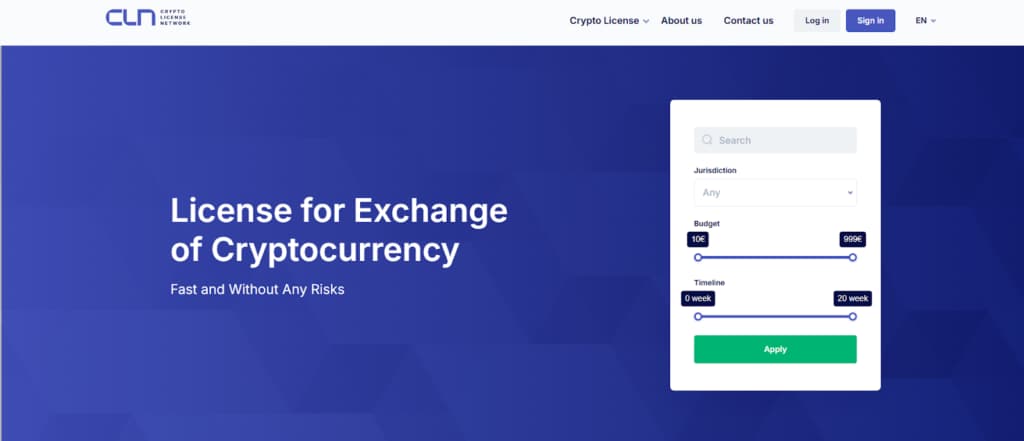
Crypto License is a legal services provider dedicated exclusively to the cryptocurrency sector, guiding businesses through the specific regulatory and licensing challenges of operating a digital asset service.
The firm concentrates on the procedural and legal intricacies of securing authorization from financial regulators worldwide, offering a clear pathway for exchanges and VASPs to achieve compliant market entry and operation.
Key Services
- Legal support for obtaining crypto exchange and VASP licenses in key jurisdictions, including the UK, USA, Estonia, Lithuania, Poland, UAE, and Hong Kong.
- Advisory on AML/CFT, capital requirements, and ongoing regulatory compliance.
- Guidance on jurisdiction-specific application processes and regulator expectations.
- Assistance with related commercial, corporate, and financial law matters tied to crypto operations.
Crypto License handles cryptocurrency licensing. They manage the full application process required by regulators. Suited for businesses needing clear steps to get and keep licenses for compliant crypto exchanges or VASPs.
3. Global Law Experts

Global Law Experts operates as a selected network of legal professionals. Matches clients to pre-vetted independent firms and experts in 140+ countries.
Provides localized advice in every key practice area. Targets businesses with complex international requirements — regulatory compliance, licensing, fintech, and crypto included.
Key Services
- Access to local legal expertise for corporate, commercial, tax, IP, and regulatory matters in numerous jurisdictions.
- Multi-jurisdictional coordination and referrals for cross-border projects.
- Support with licensing, business formation, and compliance within a general legal practice framework.
- Collaboration tools and a network structure for managing international legal needs.
The network’s primary strength is its extensive global reach combined with genuine local presence. Clients gain access to established law firms with deep regional knowledge.
This model is particularly effective for enterprises with diverse, multi-country legal needs that extend beyond pure crypto licensing, providing a single point of contact for coordinating specialized legal support across different markets.
How We Selected These VASP Compliance Providers
We chose based on what enterprise clients need most:
- Experience securing different licences in the main jurisdictions for growing companies.
- Strategic help building the full regulatory setup, not only legal filings.
- Coverage across countries with real local knowledge of regulators and processes.
- Complete service from picking jurisdiction to application, ongoing compliance, banking setup, and compliance team hiring.
- Good standing and specialisation in crypto, fintech, and regulated finance.
Why Enterprise Compliance Fails Without Centralized Control
For an enterprise crypto project, compliance is not a standalone department. It is a fundamental component of the business.
If compliance management is divided among different law firms in different countries, handled by an internal team without a unified global strategy, or approached as a one-time licensing task, the business structure is put at risk.
This approach leads to a number of problems:
- Inconsistent compliance policies across regions, which regulators may identify as attempts to exploit differences in rules.
- A license secured in one country could be compromised by insufficient corporate governance in another.
- Banking partners will likely reject a business that cannot provide a consistent and clear compliance overview.
- Audits become inefficient, requiring the collection of documents from many uncoordinated sources.
Additionally, without central oversight, adapting to regulatory changes is very difficult. When new rules are introduced, such as updates from the FATF or the EU’s MiCAR, a decentralized compliance operation cannot respond uniformly. Some parts of the business may update their procedures while others do not, creating immediate compliance gaps.
Therefore, a centralized strategic partner is essential for a business operating at scale. This is not simply about delegating administrative tasks. It is about establishing a single point of control for all regulatory matters.
This partner aligns licensing, anti-money laundering policies, and corporate reporting across all jurisdictions. They consolidate various legal requirements into one coherent, verifiable operational framework.
Without this centralized management, compliance remains a costly function prone to failure. With it, compliance forms a reliable foundation that supports secure and sustainable business growth.
Conclusion
Your compliance partner is a key strategic choice for any crypto operation at scale. This decision directly impacts your ability to launch in a market, operate viably, and grow. The selection process must focus on your specific requirements, including business model complexity and target regions.
Prioritize providers with proven enterprise experience, a focus on building regulatory frameworks, and full-cycle operational support. The goal is a partner who makes compliance a stable base for growth, not a recurring problem.