
Five platforms got tested. We logged into each one. Clicked through dashboards. Checked if the sites they listed actually existed. Some showed expired domains. Others had pages with zero traffic. Those got cut.
The five below made the list. Each runs a different kind of link building marketplace. One lets you buy insertions into published pages. Another carries 75,000+ international domains. A third handles everything while you sleep. All show real sites with real metrics before you pay.
1. INSERT.LINK
This link building marketplace platform works off keywords. Type “enterprise saas” into the search field. The system crawls published articles and returns pages accepting new links. Domain Rating, monthly traffic, and article previews appear on screen. You see exactly where a client’s link would land before authorizing payment.
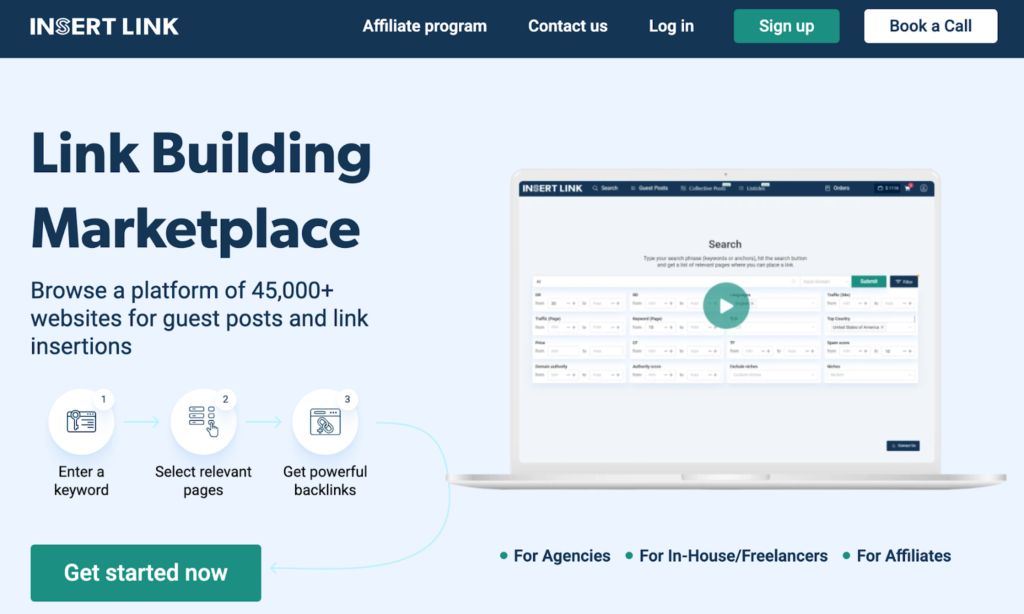
Two placement types exist. Link insertions go into content already published and ranking. Guest posts require fresh articles. Insertions move faster and cost less because no new content needs writing. The “links first, pay later” option means you review the live link before funds leave your account.
- NLP search groups publishers by content context rather than broad categories
- Insertions start around $10, guest posts begin near $40
- White-label reporting and team management built for agencies
- Trustpilot shows 4.3, DesignRush and G2 average 4.8
This level of targeting makes INSERT.LINK a strong contender for best link building marketplace discussions in 2026.
2. Linkhouse
Linkhouse has been around since 2014. Their inventory reflects that longevity. The database holds 75,000+ domains across twenty-five languages. European coverage stands out. German, French, Spanish, and Italian markets have deep selections.
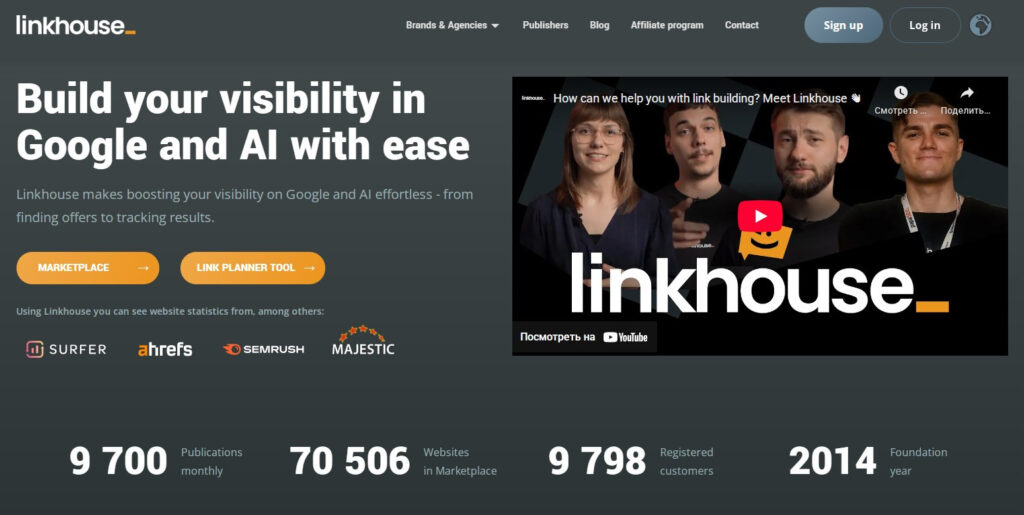
Their Backlink Gap Tool changes how you find opportunities. You enter your domain and a keyword. The tool pulls competitor data from Ahrefs, Semrush, and Google simultaneously. It shows you every portal where competitors have backlinks that are available for purchase through their platform. The analysis and acquisition happen in one place.
- Pricing starts around $9.99 for basic placements
- Copywriting runs from $29, higher authority domains scale up
- Filter by competitor count, domain authority, and relevancy
- Each listing shows Domain Authority, Trust Flow, Citation Flow, traffic estimates
For data-driven teams wanting full competitor profile analysis without manual research, Linkhouse removes steps. It functions as both a research tool and a backlink marketplace in one interface.
3. PressWhizz
PressWhizz moves faster than any platform we tested. Eighteen hours is their average link delivery time. Ninety-nine percent publishing approval rate. Those numbers change how you plan campaigns when you need quick results.
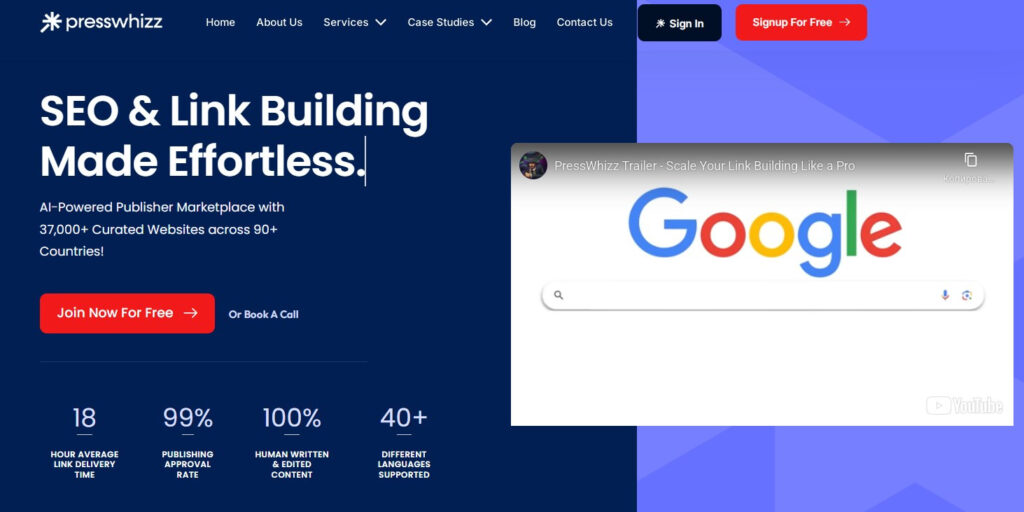
The marketplace backlink inventory sits at 37,000+ curated sites across ninety countries. Forty-plus languages supported. Average price per link runs $131.61. A search for UK domains with DR40+ shows opportunities around $80.
Their competitor research tool works differently. You search competitor brand terms instead of comparing full backlink profiles. Type a competitor name. The platform returns every site mentioning them. You see domain authority, organic traffic, spam score, and the exact page where your competitor appears.
- Full URL previews appear before purchase
- Twelve-month replacement guarantee on all links
- Add tiered signals like social shares at checkout
- One-time pricing, no subscriptions, crypto accepted
For buyers who need to see exact page context before purchasing, PressWhizz delivers. It is one of the more transparent backlink marketplace platforms for page-level inspection.
4. Loganix
Loganix positions itself as the behind-the-scenes partner for agencies. You bring the clients. They handle execution. The setup takes minutes. Create an account. Browse services. Place an order.
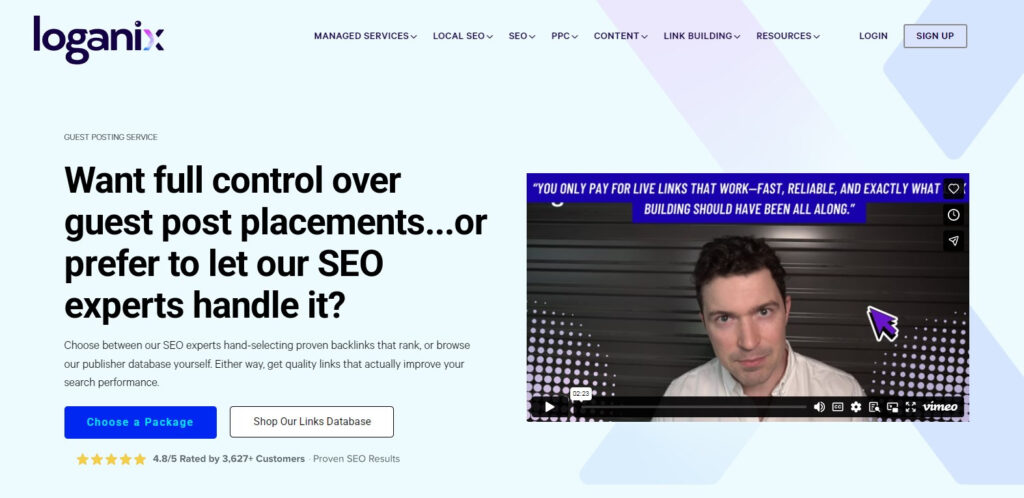
Their authority link building service focuses on niche-specific backlinks from sites with strong organic traffic. You approve every placement before it goes live. No surprises. No links from domains you would not touch.
- Services start around $7, link building scales with authority needed
- Dashboard shows orders, approvals, and deliverables in one place
- Industry names like Brian Dean and Nick Eubanks have publicly trusted them
- Reports come with your logo, clients never see the platform
Agency owners mention saving thirty hours a month by outsourcing execution here. For agencies searching for a reliable best backlink marketplace partner that stays invisible, Loganix fits.
5. Bazoom
Bazoom positions itself as an extension of your team rather than just a link catalog. The difference shows in the details. A dedicated client manager checks in regularly. Support runs 24/7 with over eighty people available. Their AI scans your site and suggests specific pages to target. Someone picks up the phone when you call.
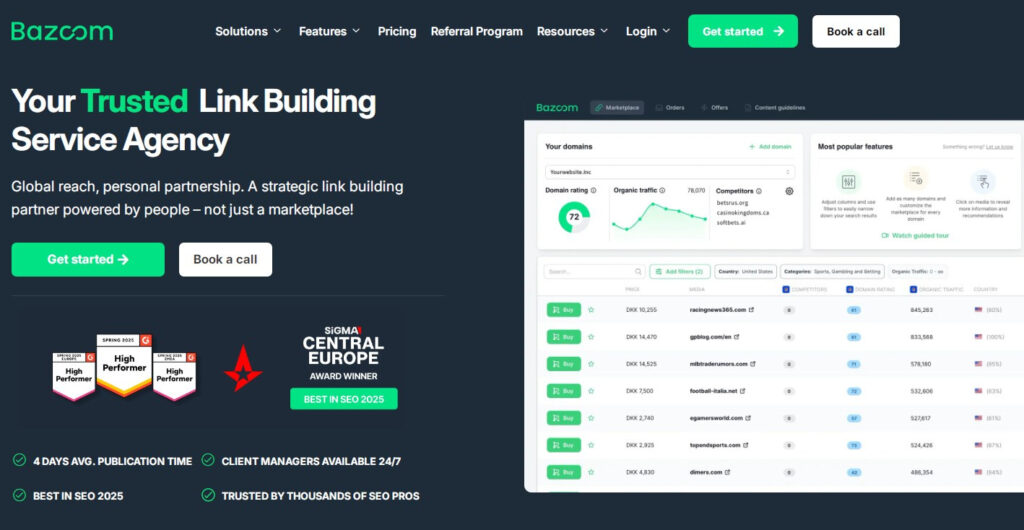
The platform covers everything in one price. Content writing. Publication. Management. No line items for extras. Average publication time runs four days.
- Intelligent marketplace pulls metrics from Ahrefs, Moz, and Semrush
- Publishers vetted upfront, no guessing which sites are legitimate
- Thousands of SEO professionals use them
- Free strategy input from client managers
Pricing runs custom based on your needs. They focus on enterprise and agencies with larger budgets. But the human support changes the experience entirely. This level of vetting makes it a trustworthy SEO backlink marketplace for enterprise-level work.
Where These Platforms Differ Most
We ran “best running shoes” through all five. Same keyword. Same day. Wanted to see what came back.
INSERT.LINK showed 47 pages ready for link insertions. Each listing included DR, monthly traffic, and article preview. One was a gear review site pulling 12,000 visitors monthly. $85 to place a link. The exact spot appeared on screen before checkout.
Linkhouse opened with competitor data. Their tool pulled sites already linking to pages ranking for that term. Filtered down to what’s available in their inventory. Research and purchase in one window.
PressWhizz had links live inside 20 hours. Not proposals. Live URLs. Full page previews before buying. Picked a DR 42 site with 3,500 monthly visitors. $147. Done.
Loganix sent a list for approval first. We picked three. They wrote content. Handled placement. Eleven days later we had reports with our logo on top.
Bazoom connected us with a client manager within the hour. She asked about niche preferences, target metrics, past campaigns. Three days later she sent recommendations. We approved five. Her team ran with it.
Speed ranges from 20 hours to two weeks. Control runs from full page selection to fully managed. Pick based on whether you want to inspect every URL or just want links showing up.
Final Thoughts
Some people want to inspect every page before committing cash. INSERT.LINK shows you the exact article where your link will land. Domain Rating, traffic numbers, and a preview all visible before checkout.
Others prefer letting competitor data guide their picks. Linkhouse built their Backlink Gap Tool for this. You enter your domain and a keyword. The system pulls competitor backlink profiles and highlights which of those domains are available for purchase.
Speed drives some campaigns. PressWhizz averages eighteen hours from order to live link. Full URL previews appear before purchase. If a link disappears within twelve months, they replace it.
Agencies often need to stay behind the scenes. Loganix handles execution while your brand stays on client reports. Services start at $7. The dashboard shows orders, approvals, and deliverables in one place.
Guided campaigns work better for others. Bazoom assigns a dedicated client manager who learns your niche. Support runs 24/7 with over eighty people available. They suggest specific targets based on your site.
Pick the scenario that matches how you work. Run three to five links through that platform. See how the actual purchase process feels. Some link building marketplace platforms will fit naturally into your routine. Others will create friction. That is how you separate the right tool from the wrong one.