
You can spend weeks doing lessons and still go blank when someone speaks to you in real life. In an app, the situation is controlled: you know there is a task, you have time to think, and mistakes do not feel that serious. A real conversation is messier. People speak over each other, skip words, change topics, laugh, repeat themselves, or use phrases you have never seen in a lesson. This list looks at platforms that help with that jump from controlled practice to actual use.
1. Promova
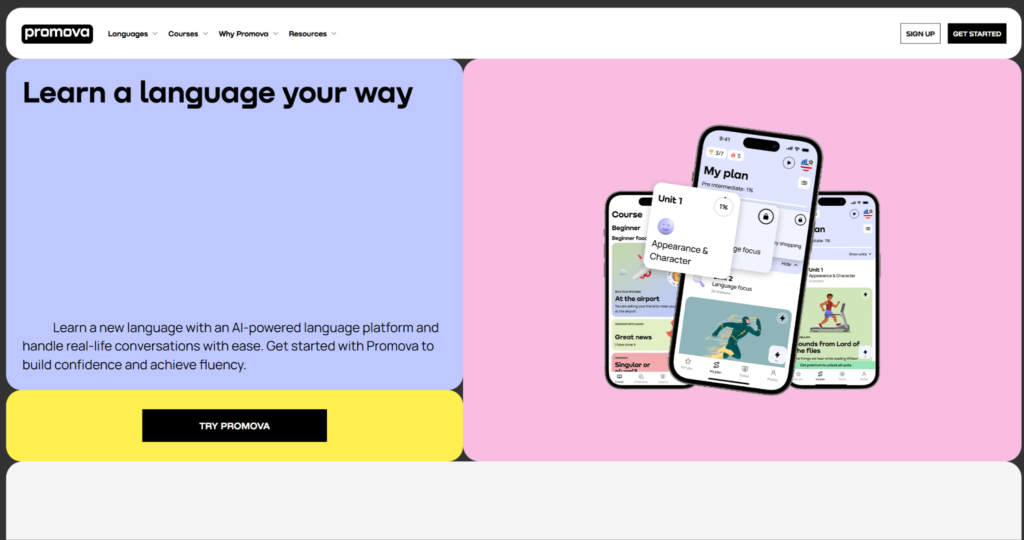
Promova is an AI-powered language learning app for people who want to speak. You do not just move through exercises and hope speaking will come later. The app includes structured courses, AI Tutor support, speaking practice, and AI dialogues, so users can try using the language before they need it in a real conversation.
The courses are made by certified teachers, which helps the learning path feel less random. Promova also has Dyslexia Mode 2.0, White Noise Mode for ADHD learners, and ASL support. These features matter because not every learner works well with the same layout, pace, or study environment.
For this list, Promova takes the first spot because it covers more than one part of real-world practice. It gives users a course structure, space to speak, AI support, and tools for different learning needs. That makes it a strong choice for people who want to practice without jumping straight into live lessons.
Promova does not treat real-world practice as one separate feature. The lessons give users the base, while AI Tutor and speaking tasks help them actually use what they learn. That matters for learners who can recognize words on screen but struggle to answer out loud. Here is what stands out:
- AI Tutor support: Lets learners practise conversations without booking a live session;
- AI speaking practice: Helps users answer, repeat, and get more comfortable with active language use;
- Teacher-made courses: Keeps the learning path grounded in expert-created material;
- Structured lessons: Gives users a clearer route from study to practical use;
- Accessibility tools: Dyslexia Mode 2.0, White Noise Mode, and ASL support different learning needs.
Promova leads because it puts several useful parts together: guided study, AI conversation practice, teacher-made lessons, and accessibility. For learners who want real practice without a rigid class schedule, that setup makes sense.
2. Preply
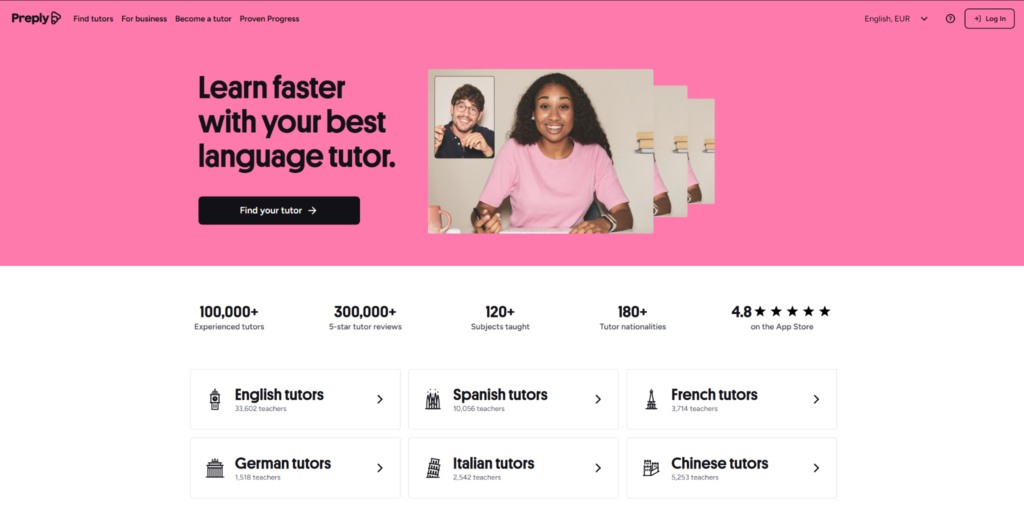
Preply is where language practice stops being private and safe. You book a tutor. You join a lesson. Suddenly, someone is waiting for your answer. That feels uncomfortable at first. But that discomfort is exactly why the platform works. You can filter tutors by language, price, accent, schedule, background, or a specific goal like interviews, travel, or work calls. Preply is useful when you need correction while you speak. Not after another quiet app exercise where no one is listening.
A tutor changes the pace of practice completely. They hear when you slow down. They ask why you chose a certain phrase. They push the conversation in directions you did not expect. That kind of pressure is hard to copy inside a normal app. Here are the main strengths:
- Private tutor lessons: One person listens, corrects, and adapts the session to your level.
- Tutor filters: You can choose by price, schedule, accent, teaching style, or learning goal.
- Goal-focused practice: Lessons can target travel, work, exams, interviews, or everyday speaking.
- Live conversation: You answer in the moment instead of preparing perfect lines in advance.
Preply makes sense when you want a real person involved in your practice. It takes more effort than a quick app lesson. But that effort is exactly why it feels closer to real use.
Good fit for: learners who want private lessons, live correction, and real conversation with a tutor.
3. italki
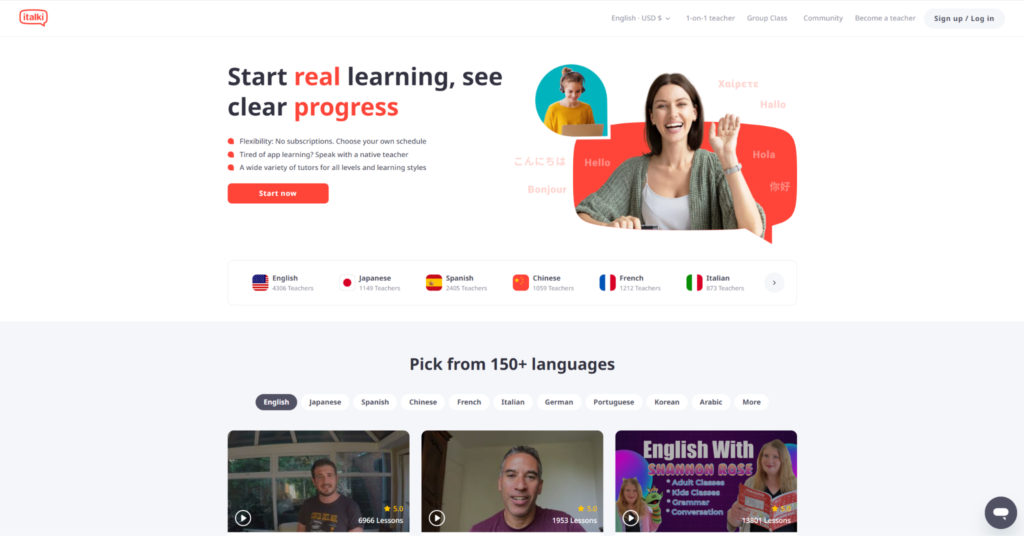
italki works for learners who want more say in who they practice with. This is not a fixed course. Not an app where the path comes pre-arranged. You search through professional teachers, community tutors, native speakers, and lesson types across dozens of languages. That helps if you are learning something less common. Or if you want a very specific kind of practice—grammar drills, casual chat, or accent work.
Some people use italki for serious grammar study. Others just book casual speaking sessions so they stop freezing mid-sentence. That flexibility is the reason people stick with the platform. But it also means you carry more responsibility. You can build a serious routine, book casual conversations, or mix both approaches. Maybe you want grammar correction from a professional teacher. Maybe you only need speaking time with a native speaker. Here is what makes it work:
- Large tutor selection: Gives learners many options across languages and teaching styles;
- Professional and community tutors: Lets users choose between formal instruction and casual practice;
- Wide language coverage: Helps learners find support for popular and less common languages;
- Flexible lesson setup: Allows practice around personal goals, schedules, and budgets.
- italki is a strong option when variety matters more than a built-in app system. It gives access to people, but the learner has to shape the process.
A better fit for: learners who want a broad tutor marketplace and flexible conversation practice.
4. Cambly
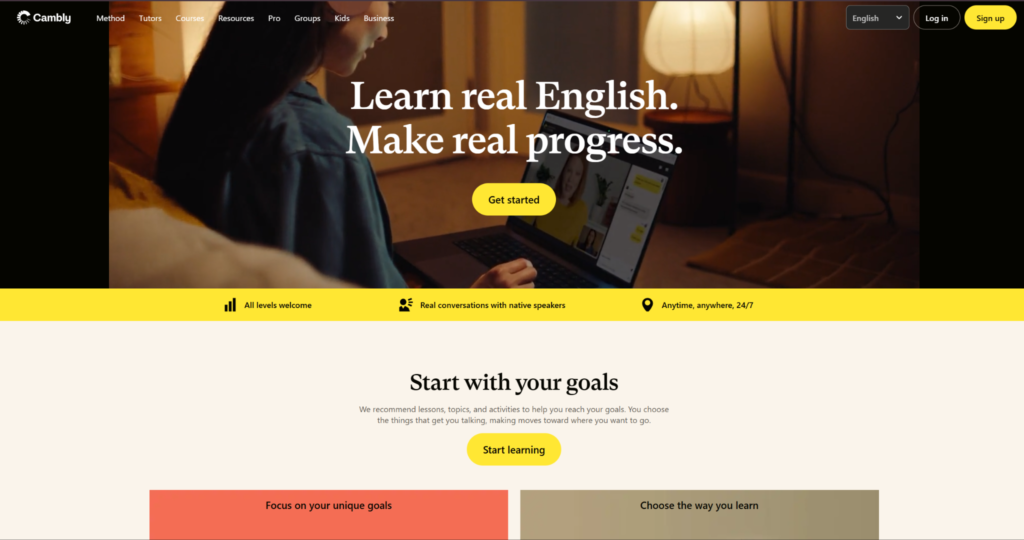
Cambly is more focused than most platforms on this list. It is built mainly around conversational English. The goal is not to cover every language or every possible study format. Learners use it when they want to speak with tutors, practice natural answers, and build confidence in live conversation. That narrower focus can be a plus if English speaking is your exact problem. Cambly works best for users who already know some English but need more time actually using it.
Cambly does not feel like a full academic course. That is part of the appeal. You join a session, talk to a tutor, get corrected, and leave with more speaking practice than you had before. It works best when you need less theory and more live use. Key points include:
- One-on-one English practice: Gives learners live speaking time with tutors;
- Conversation focus: Helps users practice natural answers instead of textbook phrases;
- Flexible sessions: Works for people who want speaking practice without a strict school format;
- Confidence building: Gives learners more chances to speak without overthinking every sentence.
Cambly is useful when fluency and confidence matter more than a full course structure. It is not the broadest platform, but it knows what problem it is solving.
Best suited to: English learners who want live conversation practice and a low-pressure speaking setup.
5. Lingoda
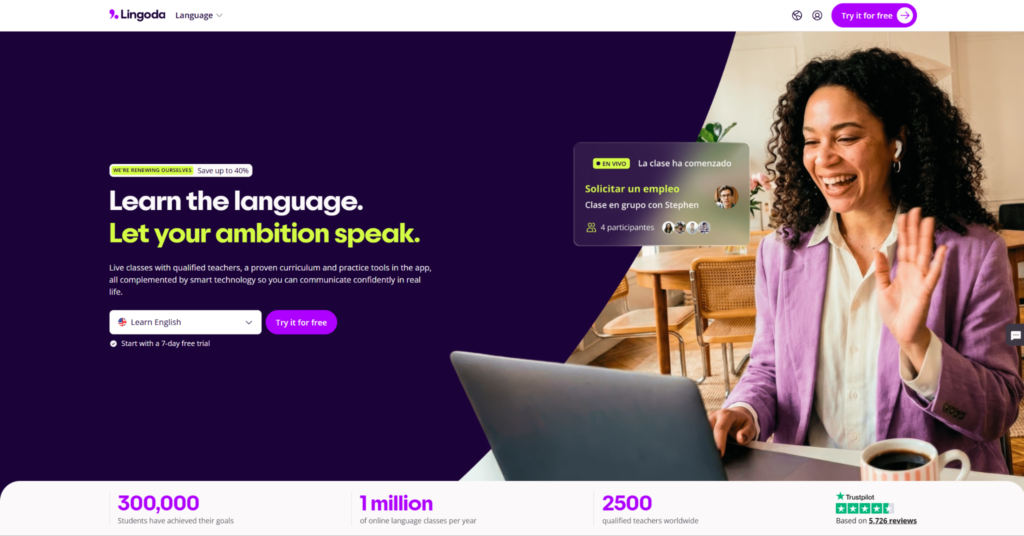
Lingoda feels more like an online school than a casual app. You get live online classes. Small-group and private lesson formats are both available. Certified teachers run the sessions. The platform uses structured levels, class plans, and a formal learning route. That makes Lingoda a solid choice for learners who want real-world practice but still need a schedule. It is less loose than tutor marketplaces. Less casual than self-study apps.
Some learners just do better when a class sits on the calendar. A scheduled lesson creates pressure. You show up. You speak. You keep moving through the material. Small groups add another useful layer. You hear other students stumble and recover. You practice responding in a live setting instead of alone in front of a screen. Here is what you actually get:
- Live online classes: Give learners real-time practice with teachers and other students;
- Small-group format: Adds speaking practice without the pressure of a large classroom;
- Structured levels: Helps learners follow a more formal learning route;
- Certified teachers: Keeps lessons closer to a school-style experience.
Lingoda works well for people who need accountability baked in. You get a clear class format. You are not left alone with app exercises and a vague promise to practice more.
Most useful for: learners who want live classes with a structured school-style path.
6. FluentU
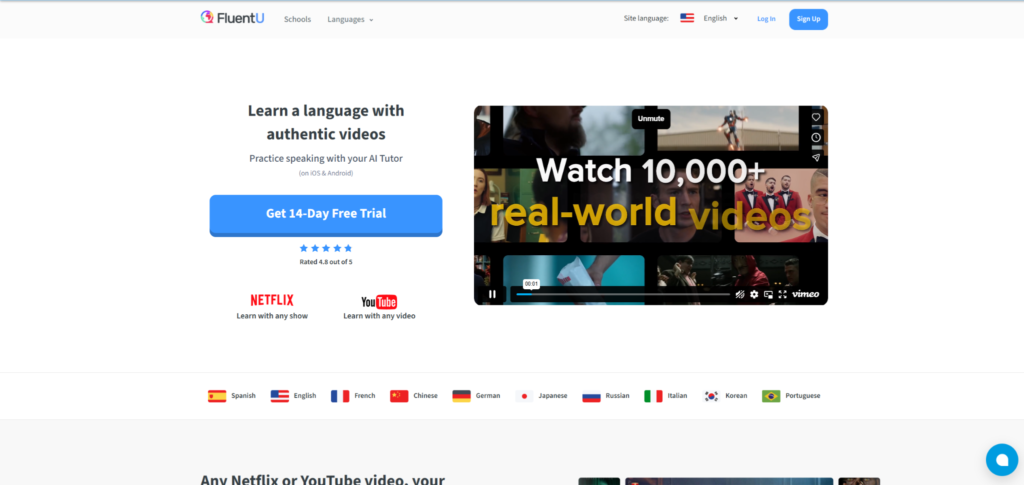
FluentU is useful when the lesson audio stops preparing you for how people actually speak. In normal lessons, voices are clean, slow, and easy to follow. Real speech is messier. People cut words, use slang, change pace, mumble, laugh, and rely on context. FluentU works with that problem through real videos, captions, translations, and vocabulary tools. It is not a tutor platform, but it helps you get used to a language that sounds less like a textbook recording.
The point is simple. FluentU trains listening in a more natural setting. You hear accents, pauses, rhythm, and phrasing that normal exercises often leave out. Captions and clickable words keep the video understandable. You are not just guessing from noise. The most useful parts are:
- Authentic videos: Show natural speech, accents, pauses, and everyday usage;
- Interactive captions: Let learners check the meaning without leaving the video;
- Vocabulary in context: Helps new words feel less abstract because they appear in real scenes;
- Listening support: Helps learners who understand lessons but lose track when people speak faster.
FluentU works better as an extra listening tool than as a full course. It is useful when you already understand the basics, but real speech still feels too quick, messy, or unfamiliar.
A good pick for: learners who want real video input and better listening practice.
Final Thoughts
Real-world practice starts where normal lessons stop feeling enough. Some learners need to speak without freezing. Some need a tutor who corrects them live. Some need scheduled classes because self-study keeps falling apart. Others understand lessons well but lose the thread when people speak naturally.
Promova takes first place because it covers several of those gaps in one platform. AI speaking practice, AI Tutor support, guided lessons, teacher-made courses, and accessibility tools all live in the same place. Preply and italki fit learners who want live tutor practice. Cambly is better for English conversation. Lingoda gives a class-based route. FluentU helps with natural listening. The smartest choice is not the platform with the longest feature list. It is the one that helps with the part of language use you actually avoid.