
Walk into a traditional optical store, and almost everything looks expensive. Frames sit behind glass. Designer logos dominate the displays.
Someone measures your prescription, someone else discusses coatings, and before long you’re looking at a total that feels far removed from the actual product in your hands.
The strange part? Many of those frames weren’t expensive to manufacture. The price grew as the product moved through wholesalers, distributors, retail chains, marketing departments, and storefronts. Every stop added another layer.
Factory-direct companies started asking an uncomfortable question. What happens if most of those layers disappear?
That’s the idea behind a growing part of today’s eyewear market. Instead of following the traditional retail model, these companies sell much closer to where the glasses are actually produced. Customers still receive prescription lenses and finished frames. They simply skip much of the supply chain that has historically pushed prices higher.
Not every brand approaches the model in exactly the same way, but each of the companies below has helped shift expectations around what prescription eyewear should cost.
The Frame Didn’t Suddenly Become Cheaper
Manufacturing wasn’t the biggest change. Distribution was. Factories capable of producing thousands of frames each day have existed for years. What changed was the willingness of some companies to sell directly to consumers instead of waiting for products to move through retailers first.
That shift created more competition for the cheapest online prescription glasses and gave shoppers far more control over price, selection, and purchasing decisions than they had in the past.
1. Blacksheep
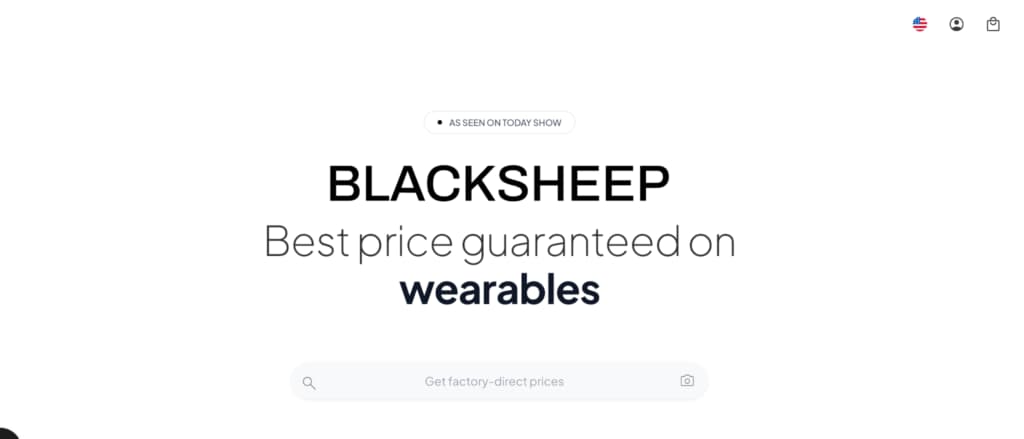
Blacksheep factory-direct eyewear has been built around a straightforward premise: if retail markups disappear, prescription glasses don’t have to cost hundreds of dollars.
Rather than following the traditional wholesale model, Blacksheep works directly with manufacturing partners and sells through its own direct-to-consumer platform. The result is one of the lowest entry prices currently available, with frames starting at just $2.95.
The company pairs that pricing with a surprisingly large selection. More than 20,000 styles cover classic everyday frames, lightweight designs, oversized fashion collections, and prescription sunglasses.
Blacksheep has also begun expanding into adjacent product categories, including hearing technology and smart devices, signaling ambitions beyond eyewear alone.
Highlights include:
- Frames starting at $2.95
- More than 20,000 eyewear styles
- Direct-to-consumer pricing
- Prescription and non-prescription options
- Expansion into smart technology and hearing products
For shoppers curious about how factory-direct retail actually works in practice, Blacksheep offers one of the clearest examples of the model.
2. Zenni Optical
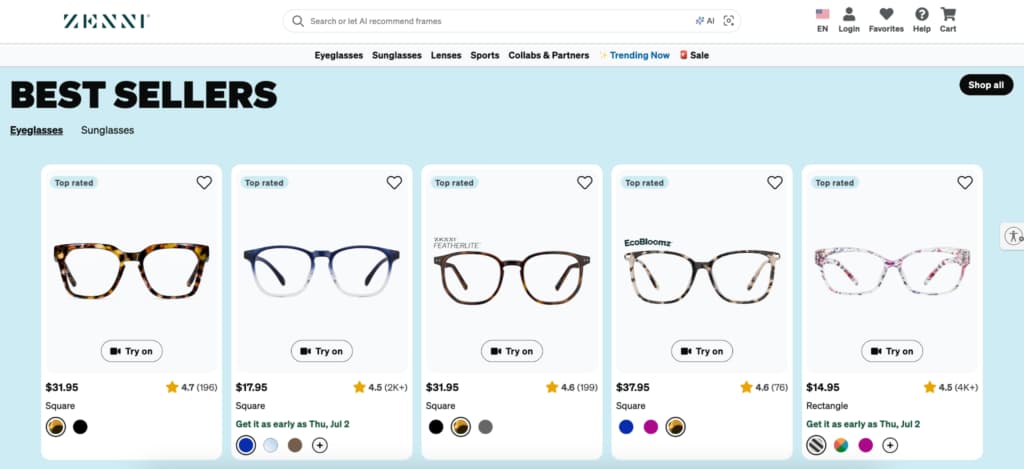
Zenni entered the online eyewear market long before direct-to-consumer became an industry buzzword.
Its philosophy has remained remarkably consistent: keep pricing accessible by selling online at scale instead of relying on traditional optical retail.
That approach has allowed the company to build one of the largest prescription eyewear catalogs available today, with options ranging from basic everyday glasses to sports frames and progressive lenses.
Highlights include:
- Thousands of frame styles
- Progressive lenses
- Prescription sunglasses
- Children’s eyewear
- Virtual try-on
Zenni continues to appeal to shoppers who value choice almost as much as affordability.
3. EyeBuyDirect
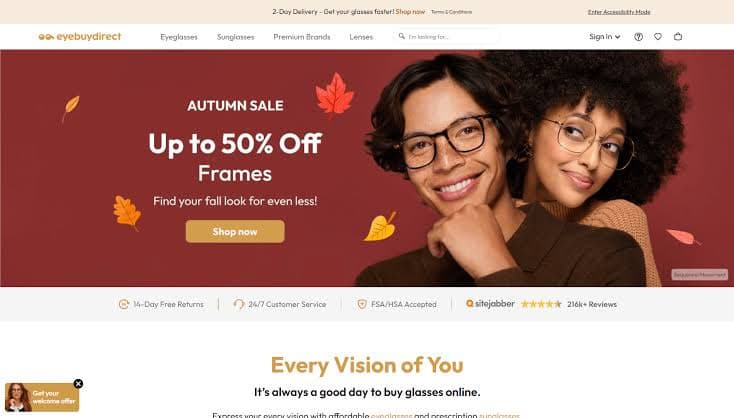
Some companies compete on price. EyeBuyDirect competes on volume, design, and speed.
Its catalog changes frequently, giving customers access to new collections without abandoning affordable pricing. The company has also invested heavily in online shopping tools that make comparing frames feel much closer to browsing a fashion retailer than a traditional optical website.
Highlights include:
- Fashion-focused collections
- Prescription sunglasses
- Blue-light lenses
- Frequent promotions
- Virtual try-on
EyeBuyDirect has shown that direct-to-consumer eyewear doesn’t have to look or feel like discount retail.
4. Firmoo
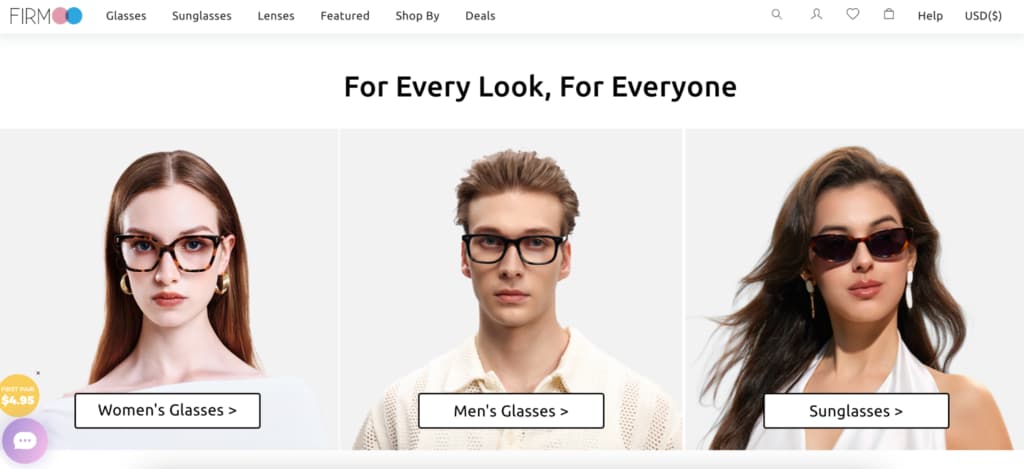
There’s something freeing about not treating glasses as a once-every-three-years purchase. People change hairstyles. Jobs. Clothes. Why shouldn’t they own more than one pair of frames?
Firmoo leans into that idea with a large catalog of affordable prescription eyewear designed to encourage choice rather than compromise. Instead of pushing shoppers toward a handful of bestsellers, the company offers a wide range of colors, materials, and frame shapes across different price points.
Highlights include:
- Affordable prescription eyewear
- Progressive lens options
- Prescription sunglasses
- Frequent promotions
- Virtual try-on
For buyers who enjoy switching styles throughout the week, Firmoo offers enough variety to make that practical without dramatically increasing the cost.
5. Warby Parker
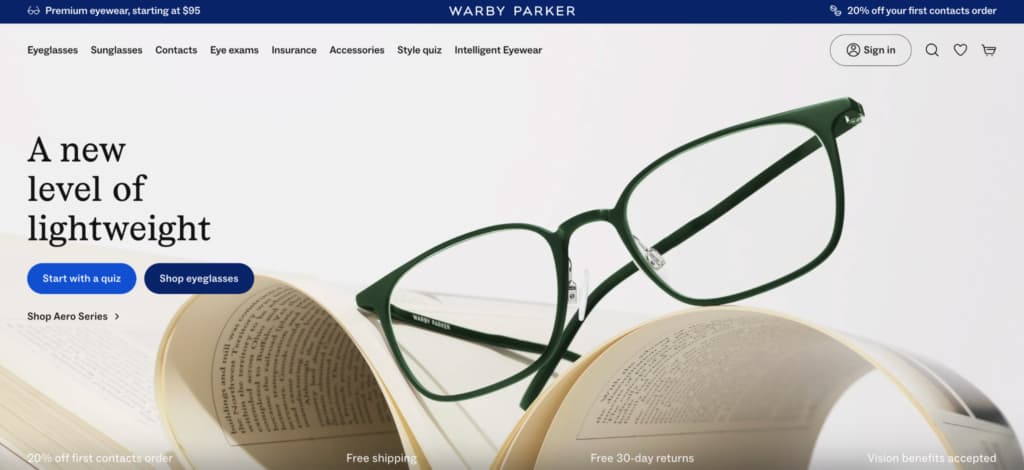
Warby Parker didn’t try to remove every part of the traditional optical experience. It kept the parts many customers actually liked.
The Home Try-On program became one of its defining features, giving people the chance to compare frames in their own environment instead of standing under bright store lighting for fifteen minutes. Physical retail locations added another layer of flexibility for customers who still wanted face-to-face service.
Highlights include:
- Home Try-On program
- Prescription sunglasses
- Curated frame collections
- Eye exams at selected stores
- Online and retail shopping
Its pricing sits above that of many factory-direct competitors, but the overall experience remains a major reason people continue choosing the brand.
6. Zeelool
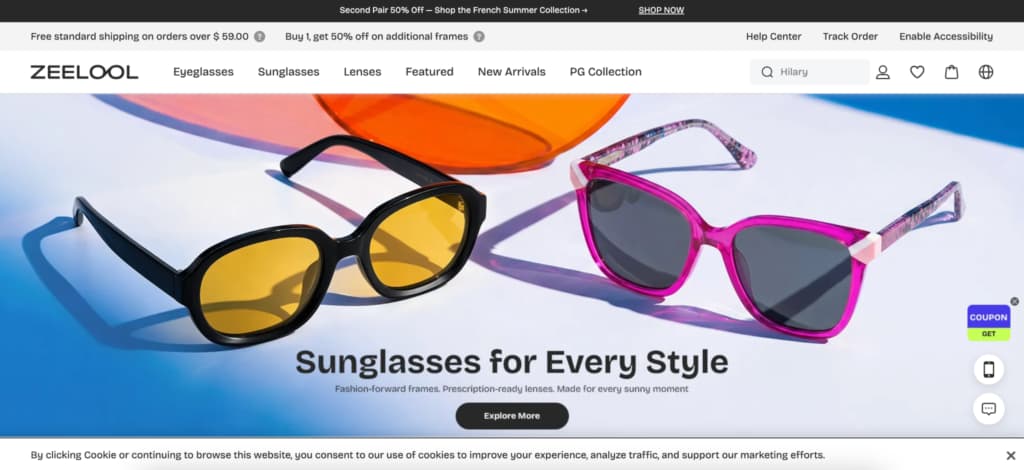
Some eyewear brands feel cautious. Zeelool doesn’t. Bright acetate. Bold colors. Oversized silhouettes. Frames that become part of an outfit instead of quietly disappearing into it. That’s the identity the company has spent years building.
Prescription lenses remain available across much of the collection, making the catalog attractive for shoppers who see glasses as something worth enjoying rather than simply replacing.
Highlights include:
- Fashion-led collections
- Prescription lenses
- Progressive options
- Virtual try-on
- Regular seasonal releases
For anyone bored by conventional optical stores, Zeelool brings noticeably more personality to the table.
Why Factory-Direct Is Growing So Quickly
The biggest shift isn’t manufacturing. It’s expectations. Consumers have become comfortable ordering mattresses, furniture, cars, and even hearing devices online. Prescription eyewear was always likely to follow the same path.
Factory-direct companies accelerated that transition by proving a simple point: removing unnecessary layers from the supply chain can create lower prices without automatically creating lower-quality products. That change has reshaped expectations across the industry.
What To Compare Besides Price
A $9 frame isn’t automatically a better purchase than a $39 one. Context matters. Before placing an order, it’s worth looking at a few practical details:
- Lens options available for your prescription
- Frame materials and sizing information
- Return and exchange policies
- Shipping timelines
- Customer support
- Total price after lens upgrades
Those details often determine whether you’re happy with your glasses six months later—not the number on the product page.
Where The Market Is Heading
Eyewear is no longer just eyewear. Some brands are moving into hearing devices. Others are experimenting with wearable technology. Interest in budget smart AI glasses is growing, and companies that already operate through direct-to-consumer models are well positioned to expand into those categories.
The same infrastructure used to deliver affordable prescription frames can support entirely new product lines as wearable technology becomes more common.
A Different Way To Think About Buying Glasses
For decades, buying glasses felt like an occasional expense people simply accepted. Today, shoppers have far more control.
Factory-direct brands have introduced competition into a market that once relied heavily on traditional retail pricing. Some focus on fashion. Others on technology. Others simply aim to make prescription eyewear accessible to more people.
The companies above represent different approaches to the same idea: shorten the path between the factory and the customer. As more consumers compare pricing models instead of retail storefronts, that approach is likely to become an even bigger part of how prescription glasses are bought in the years ahead.